Your Best Research Is the Hardest Thing to Find
So you spent a bazillion dollars creating a proprietary research report. Great. There's just one big problem. The most popular way of things being searched can't see it.
Firms gate research to get leads. The form is how you find out who cares, and those are prospective buyers. But most of the buying decisions now happen before anyone fills anything out.
According to 6sense, 94% of B2B buyers used an LLM during their last purchase. Buyers fire up ChatGPT in the middle of their journey to compare options, evaluate proposals, build shortlists, and summarize what they've read.
Unfortunately, your report may not be taking part in the buying decision because its discoverability is limited. A gated file is usually inaccessible to crawlers, so it's harder for search and AI systems to access and cite or summarize in AI-driven discovery.
That creates a gap between the research you own and the research the market can actually find. I call this the Retrieval Gap.
The locked report
It's a tale as old as time. A firm spends big money on research, and then someone decides it's way too valuable to hand out for free. Almost 70% of marketers use gated assets, webinars, and interactive tools to collect first-party data.
I'm not arguing to rip the gate off. That form does catch people who are motivated enough to stop looking, and that's a real lead. But there may be 10 people on a buying committee, and nine of them are never filling anything out. They're asking their favorite LLM which firms they should be looking at, and your research isn't considered in the answer.
This happens more than you think. I won't name names to protect the guilty, but I just read a gated report by a firm telling banks how to be better at measuring the impact of their marketing, and then it puts out something that can't be measured or found by anyone starting their search in an LLM.
What's out in the open gets found
LinkedIn is now the most cited domain for professional queries across six major AI platforms.
Profound looked at 1.4 million citations across ChatGPT, Gemini, Google AI Overviews, AI Mode, Copilot, and Perplexity. LinkedIn outranks many traditional domains, like company and news sites, for professional searches. It's now one of the key sources for shaping AI-driven discovery.
To me, this was the most interesting part of their data:
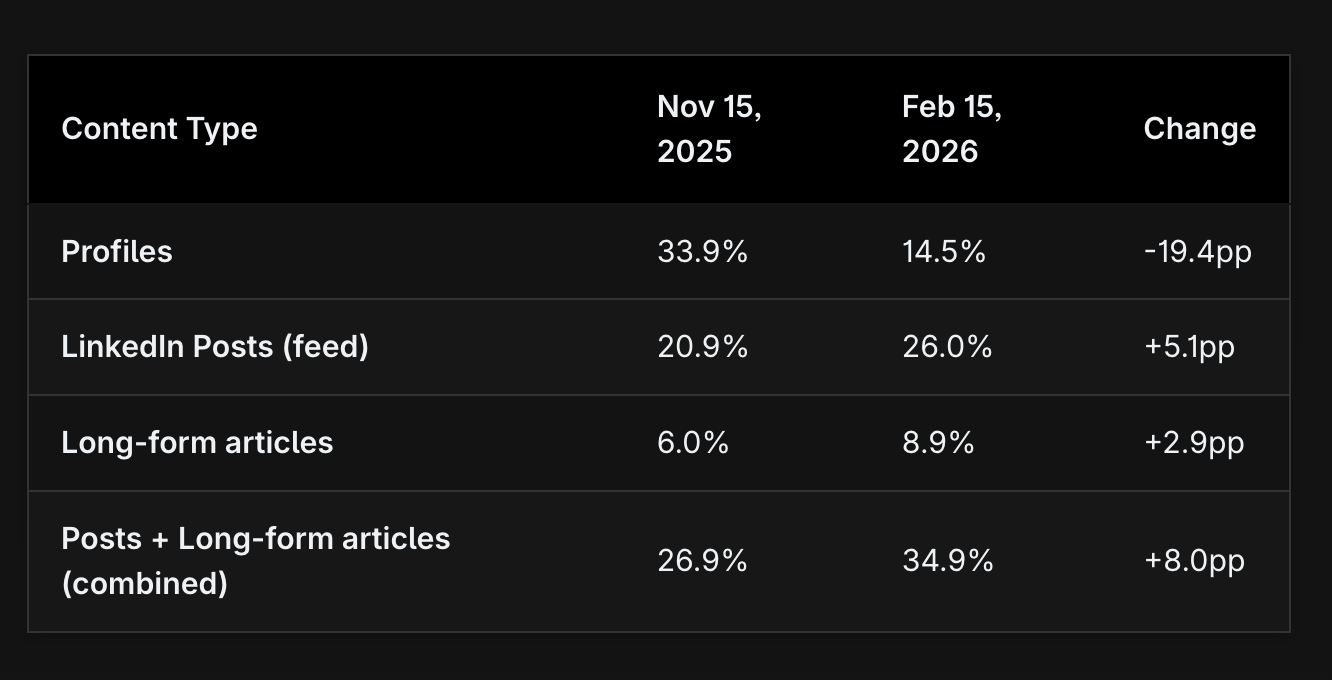
Citations of profile pages dropped, while posts and articles increased. What gets cited is the thing you published, not the page explaining your company.
Suddenly, creating good content on your LinkedIn pages just got a lot more valuable. And that goes beyond just your company page. SMEs, your CEO, and product updates posted up on LinkedIn can all help get you found in LLMs.
The same goes for your research reports.
Creating more only works if it's pointed at something
Now before you upload your report into Claude and say "Give me 10 posts on this. Make no mistakes." There's one last thing to remember.
Volume doesn't always do the work you think it does.
A study that ran 252,000 trials across six LLMs found that relevance and completeness are what drive citations, and that formatting only barely moves anything at all.
Eleven of 18 factors (61%) reached significance in 4+ models, forming a clear hierarchy. At the top, four gatekeepers were unanimous across all six models with large effects (OR > 100): Topic Mismatch, Price Not Mentioned, Recent vs Old Timestamp, and Lower List Position. Failing on any one can eliminate citation odds regardless of other content strengths.
So slicing the same report five ways gets you five copies of the same thing. What actually gets picked up is the piece that fully answers a question someone asked. That's a different job from repurposing.
The factors worth checking your content against are trust, relevance, completeness, and context.
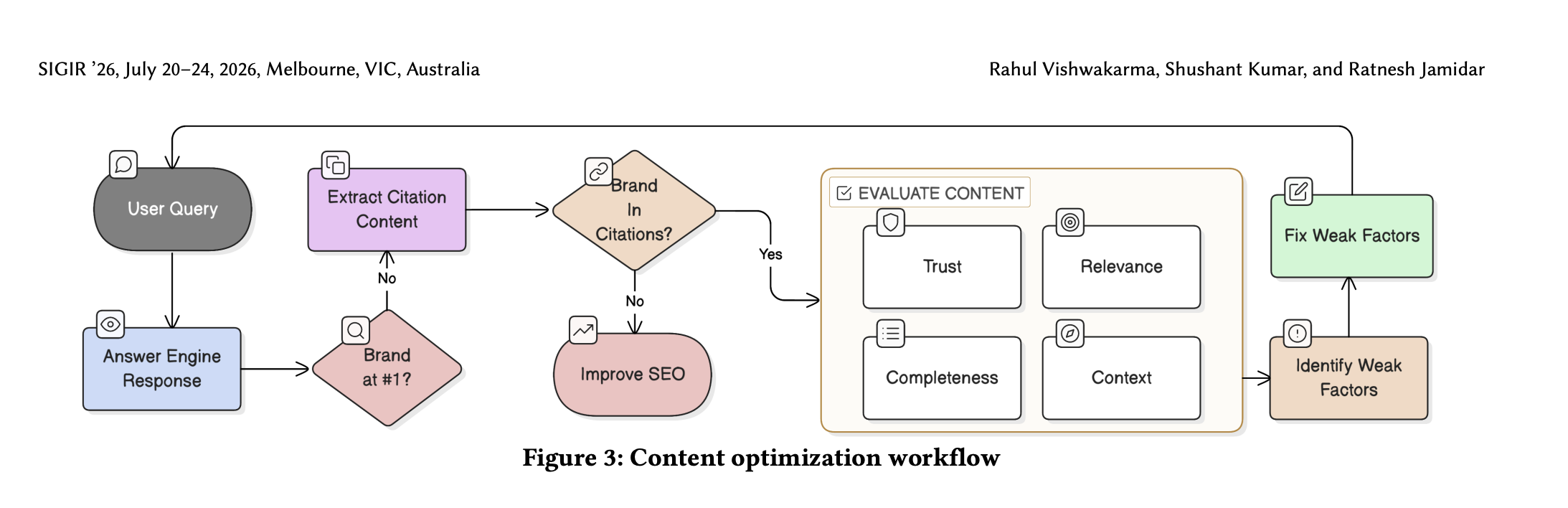
The study says that there are proactive things brands can do with their content like:
Bring up core topics early; don't bury the lede
Use evidence-backed claims instead of hedging
Keep dates current
Name pricing and features
Include comparisons
Get those right, and you're cooking.
Consider starting from the question, working back to the part of the research that answers it, and publishing that as its own complete thing. Think about the data you have that answers one question or settles one thing, and write it so someone who has never heard of you can read it start to finish and walk away with an answer.
Think of it as targeted creation. You'll end up with fewer pieces, but each one does an important job.
The work isn't finished when the PDF ships
None of this means the report is a waste. In fact, some of the most valuable information out there right now is proprietary research and data.
The key is to find ways to make what you've put out there discoverable on LLMs, expand your reach of leads and citations. You want to be the firm that pops up when buyers are asking ChatGPT who they should be talking to.
Closing the Retrieval Gap just means making sure some of what you learned lives somewhere it can actually be found. You already did the hard part; now help yourself get found.
Originally published in The Usefulness Gap on LinkedIn. Subscribe here.
